
Building a dynamic cooling ecosystem for the AI factory era
January 25, 2026
How to Optimize Data Center Power Usage to Increase AI Compute Capacity
January 28, 2026Even before the “AI boom”, the data center industry had already aligned around one consensus: liquid cooling has emerged as the most viable path forward for supporting the performance, efficiency, and scalability required by next-generation AI data centers.
Recent market data reinforces this shift. In September 2025, McKinsey & Company projected the global data center cooling market to reach $40–45 billion by 2030, with liquid cooling accounting for $15–20 billion of that total. Datacenters.com reported that more than 50% of new hyperscale capacity will be liquid-cooled by 2027.
Among the various liquid cooling approaches, immersion cooling has emerged as one of the most prominent strategies, but it doesn’t come without some trade-offs in integration and operations. In response, AIRSYS has developed LiquidRack — a server-level spray liquid cooling solution designed to address these operational and deployment considerations.
This article examines these factors through an operational and metrics-driven lens.
Single-Phase Immersion Cooling: A High-Density Thermal Strategy
Immersion cooling is a liquid cooling approach in which entire servers are submerged in a dielectric fluid to manage the heat generated by high-performance computing hardware.
The immersion tank typically includes a coolant distribution unit (CDU) with a pump and plate heat exchanger that circulates the dielectric fluid. In a single-phase system, the fluid remains in its liquid state as it absorbs heat from IT components and transfers it to the facility water loop.
By surrounding all components with fluid, immersion cooling eliminates the need for server fans and enables uniform heat removal across CPUs, GPUs, memory, and power components. While thermally effective, this approach introduces unique serviceability and facility integration considerations.
LiquidRack™: A Server-Level Spray Liquid Cooling to AI Infrastructure
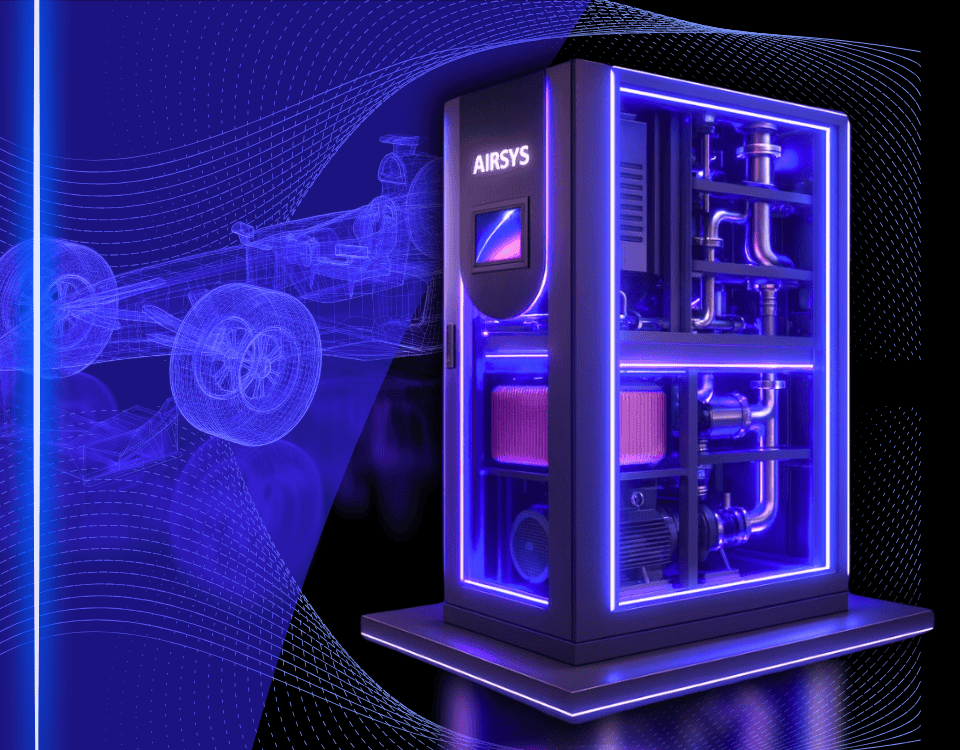
LiquidRack is the world’s first server-level spray liquid cooling solution, specifically designed to meet the thermal demands of modern AI, GPU-dense workloads.
At the core of LiquidRack is a patented single-phase spray cooling technology that applies dielectric coolant directly to the heat-generating source, rather than cooling the entire server enclosure. This spray-based cooling is integrated into two independent cooling circuits (a coolant loop and a water loop) connected by a high-efficiency heat exchanger, allowing heat to be transferred out of the data hall efficiently.
This targeted approach enables faster heat rejection, tighter temperature control, and near-complete energy recovery from IT equipment. As such, LiquidRack offers an alternative to immersion cooling, achieving comparable thermal performance while avoiding many of the serviceability and deployment challenges of full server submersion.
What Does the Difference between Immersion and Server-Level Spray Liquid Cooling Mean in Practice?
As mentioned earlier, the technical differences between single-phase immersion cooling and server-level spray liquid cooling translate into different operational and business outcomes. The following comparison examines LiquidRack and single-phase immersion cooling across key operational factors most relevant to data center operators and decision-makers.
Ecosystem & Deployment Fit
Cooling strategies are often selected based on the environments they must operate within. Choosing between immersion and server-level spray liquid cooling requires understanding how each fits existing data center layouts, hardware, and deployment constraints.
| Single-Phase Immersion Cooling | LiquidRack (Server-Level Spray Liquid Cooling) | |
|---|---|---|
| Cooling Performance & Precision | Provides uniform heat removal by fully submerging all server components, enabling strong performance at extreme densities. | Delivers targeted cooling through engineered spray on CPUs, GPUs, and memory modules, aligning cooling capacity with actual heat generation. |
| Hardware Customization | Customization typically focuses on accommodating non-compute components such as networking hardware and PDUs within the tank environment. | LiquidRack sprayers are 3D-printed to match specific heat profiles, enabling rapid, application-specific customization. |
| Retrofit Complexity | High; typically requires specialized tanks, available space, and significant structural modifications such as reconfigured power infrastructure. | Low; modular server cases are designed to integrate into existing data halls with minimal disruption, enabling incremental deployment and easier expansion. |
| Space Requirements | Requires large immersion tanks, increased floor loading capacity, and wider service clearances, reducing layout flexibility. | Uses flexible, customizable rack-frame configurations to preserve space efficiency. |
Reliability
Reliability in high-density data center environments is influenced by how cooling systems support continuity of service. When choosing between immersion and server-level spray liquid cooling, differences in serviceability and failure handling can have a direct impact on uptime.
| Single-Phase Immersion Cooling | LiquidRack (Server-Level Spray Liquid Cooling) | |
|---|---|---|
| Ease of Maintenance | Servers must be lifted out of fluid tanks for service, requiring additional handling steps and longer maintenance procedures. | Cassette-based design allows individual servers to slide in and out quickly, supporting faster and more straightforward maintenance workflows. |
| Mechanical Complexity | Fewer moving components reduce mechanical wear, but reliability depends on the quality of shared tanks and fluid systems. | Cooling components are duplicated per cassette but within a modular, rack-based architecture that simplifies fault management. |
| Failure Isolation | Cooling failures may affect multiple submerged servers within a shared tank, increasing the potential impact area. | Independent server cassettes isolate failures to a single unit, reducing collateral disruption. |
| Operational Downtime Risk | Maintenance, upgrades, or fault resolution may require partial or full tank downtime. | Individual servers can be serviced without taking the entire rack offline, reducing the risk of downtime during routine operations. |
Performance KPIs
Performance metrics play a crucial role in evaluating the impact of cooling strategies on efficiency, cost, and long-term scalability. When choosing between immersion and server-level spray liquid cooling, differences in how performance gains are realized can influence key business outcomes.
| Single-Phase Immersion Cooling | LiquidRack (Server-Level Spray Liquid Cooling) | |
|---|---|---|
| Water Usage Effectiveness (WUE) | Uses dielectric fluids rather than water, reducing direct water consumption but introducing considerations related to fluid production, handling, and disposal. | Closed-loop liquid cooling with approximately 80% lower coolant volume than immersion systems, resulting in effectively 0 WUE at the facility level. |
| Power Compute Effectiveness (PCE)* | Delivers meaningful PCE improvements over air cooling, but system-level overhead reduces the proportion of total power that can be converted into compute. | Boosts PCE from approximately 0.4 in conventional air-cooled data centers to 0.9+, converting more power to compute. |
| Sustainability | Drastically reduces energy use by eliminating server fans, lowers water consumption, enables heat reuse, and can extend hardware life by reducing thermal stress on components. | Highly sustainable cooling solution that eliminates chillers, minimizes water use, enables efficient heat reuse, and uses fully recyclable materials to support sustainability goals. |
| Cost Considerations | Can lower operating costs by reducing energy use and simplifying server hardware, but a higher upfront investment in tanks, dielectric fluids, and periodic fluid replacement can drive total costs higher over time. | Faster heat removal and higher cooling density support a lower total cost of ownership (TCO) while also relying on smaller volumes of water and low-cost coolant rather than expensive, large-volume dielectric fluids. |
* Power Compute Effectiveness (PCE) measures how much allocated facility power is converted into active compute
Choosing the Right Liquid Cooling Strategy
As liquid cooling becomes the norm, the question is no longer whether a solution can remove heat or achieve a low PUE rate. Instead, the focus shifts to how it performs in real-world operations. With that in mind, the choice between immersion cooling and server-level spray liquid cooling ultimately comes down to how well each approach aligns with a data center’s operational model, physical constraints, and efficiency goals. Taking a holistic view that extends beyond thermal performance will ensure that cooling decisions support both near-term needs and long-term data center strategies.
AIRSYS collaborates with data center operators to design cooling architectures tailored to their unique requirements. Through solutions like LiquidRack, we enable high-density compute while preserving operational flexibility and measurable efficiency gains. Contact us today to learn more about how LiquidRack can support your data center’s cooling strategy.