Leading The Rapid Shift to Liquid Cooling
May 22, 2026
PCE and ROIP: The Metrics That Will Decide The World Cup of AI
June 17, 2026 With hyperscale spending soaring, Airsys’ new 60-acre Woodruff campus leverages the Upstate’s industrial engine to build the next generation of efficient, low-PUE zero-water cooling solutions.
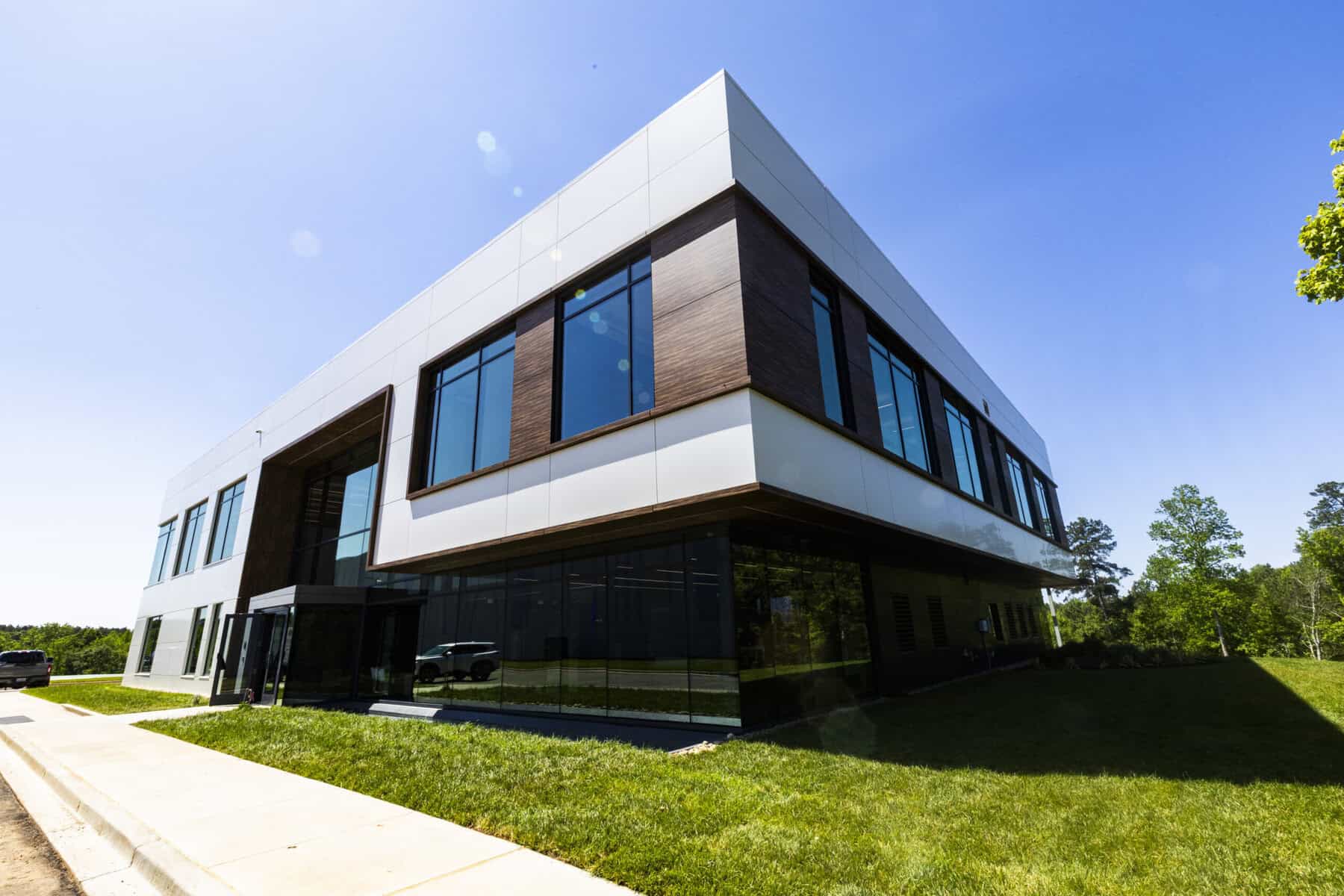 With hyperscale spending soaring, Airsys’ new 60-acre Woodruff campus leverages the Upstate’s industrial engine to build the next generation of efficient, low-PUE zero-water cooling solutions.
The first air-conditioner wasn’t developed to cool IT equipment. It wasn’t even developed to cool people.
In fact the invention of the first electrical air-conditioner can be traced back to a Brooklyn, New York printing company in the early 20th century. Amid the sweltering New York summer heat, American inventor Willis H. Carrier was credited with inventing the first modern air conditioner to maintain the optimum conditions for printing.
However, it was actually a native of the Carolinas — North Carolina to be exact — who is credited with coining the term “air-conditioner” which was eventually adopted by Carrier and the rest of the industry. In 1906, Stuart W. Cramer of Charlotte, North Carolina, developed the idea of an air conditioner to deal with the hot conditions in his textile mill.
One hundred and twenty years later and the Carolinas are still at the forefront of cooling innovation. Airsys, a global leader in mission-critical cooling for high-performing digital infrastructure, recently opened its new state-of-the-art global headquarters and advance manufacturing campus in Woodruff, South Carolina. As the company’s global manufacturing epicenter, this flagship site anchors Airsys’ worldwide produciton ecosystem, direclty driving high-efficiency, zero-water cooling innovations to support the global expansion of AI and edge infrastructure.
By establishing this centralized global hub in the Southeast U.S., Airsys secures domestic inventory and regional supply chain availability for North American data center operators, seamlessly scaling international engineering expertise into localized, rapid-deployment solutions.
Airsys’ connection to the history of cooling innovation also has a global context. In February 2026, the company announced the establishment of its first European manufacturing facility in Hungary. Coincidentally, it was a Hungarian engineer István Röck who is credited with introducing the first electric motors into thermal management.
Airsys chief executive officer Yunshui Chen was also in the right place at the right time when he founded the company in 1995. He spotted that the telecommunications infrastructure at that time had virtually no existing air conditioning industry to support it; he leveraged his experience in cooling systems to fill the void.
The Upstate Advantage: Anchoring Data Center Supply Chains in South Carolina
When it comes to innovation, place obviously matters — something Airsys clearly recognizes. The new 60-acre campus in Woodruff, is situated at the heart of South Carolina’s “manufacturing alley.” The term describes the state’s industrial corridors which are home to some of the most innovative engineering companies in the world.
For example, in the Upstate, BMW’s plant in Spartanburg is the automaker’s largest manufacturing facility globally and produces over 1,500 vehicles a day. Michelin’s North American headquarters is located in Greenville. Other car makers in South Carolina include Volvo and Mercedes-Benz, while aerospace innovators such as Boeing and Lockheed Martin also have significant facilities in the Palmetto State.
In fact, the Upstate is the state’s manufacturing powerhouse, accounting for 48% of South Carolina’s direct manufacturing employment, according to South Carolina Manufacturers and Commerce. The region hosts about 2,100 manufacturing facilities — over a third of the state’s total — generating an estimated $48 billion in economic impact and employing 117,000 skilled workers.
Airsys is now a vital cog in that economic engine, providing mission-critical infrastructure and localized logistics support for North American data center operators.
Several factors power South Carolina’s manufacturing pedigree, particularly SC Ports facilities, including Charleston Harbor — the deepest port on the East Coast — which enables finished products to be shipped internationally while also allowing easy access to imported raw materials. Inland Port Greer in the Upstate extends the Port of Charleston’s reach 212 miles inland via daily rail, slashing transit times and logistics costs for Upstate manufacturers, according to the South Carolina Ports Authority.
Major highways criss-crossing the state, including Interstate 85, 26 and 77, also ease the transport of finished goods and materials. For IT infrastructure procurement manager, this regional presence drastically reduces shipping lead times for large-scale deployments.
“South Carolina has a long history of manufacturing excellence, and Airsys’ decision to anchor its global headquarters right here in the Upstate is a testament to our state’s world- class workforce and pro-business environment,” said South Carolina Gov. Henry McMaster in a recent statement to mark the opening of the Woodruff facility.
The opening of the new HQ in South Carolina also comes at a pivotal time for many of Airsys’ end-customers in the rapidly expanding data center sector. Hyperscalers including Amazon, Alphabet, Microsoft and Meta project that they will collectively spend as much as $725 billion on IT and datacenter infrastructure. That obviously has significant upsides for those organizations at the heart of that expansion — Airsys has enjoyed sustained growth over the recent past and continues to drive wealth creation and employment such as the 215 new jobs expected at the Woodruff facility.
From Acceleration to Energy Stewardship: Fostering a New Data Center Efficiency Ethos
However, just as innovation is tied to location, data center expansion must also be carefully aligned to the local conditions, from access to power to community engagement. As facilities scale to handle high-density AI clusters, understanding baseline environmental resource demands — such as how much water a data center uses — is critical to transitioning from pure acceleration to true stewardship.
Ttraditional metrics like PUE (Power Usage Effectiveness) are no longer enough to measure true sustainability. Airsys’ Chief Strategic Relations Officer Paul Quigley recently defined how that relationship should evolve: “The industry is quietly moving from acceleration to stewardship,” he said. “Whether driven by regulation, balance-sheet pressure, power scarcity, community reaction, or simply the need for better returns, the change in focus is coming.”
Airsys, together with industry organizations such as the Open Compute Project, is fostering an efficiency ethos typified by not only a strong focus on sustainability but also specific and actionable data center efficiency metrics:
- Power Compute Effectiveness (PCE), identifies not just how efficiently a facility runs, but how effectively it turns power into actual compute. Industry certification and advisory firm Uptime Institute describes the value of PCE as: “In markets where utility interconnection capacity is constrained, this ratio can help operators understand how infrastructure design decisions affect the amount of compute that can ultimately be deployed within a fixed electrical envelope.”
- Return on Invested Power (ROIP): This concept reframes power as a capital asset, not just an operating cost, and ties productivity, risk, and return together in a way that shows up clearly on balance sheets. Airsys used the opening of its new facility to engage the local community around PCE and ROIP — both of which will be integral to measuring the value of the projects supported by the strategy and technology developed at the site.
As history shows, innovation has always been a product of its environment. Yet, as hyperscale data centers expand at a breakneck pace, the industry faces a critical turning point: technology cannot outgrow the local resources supporting it. The race is no longer just about finding the right highway corridors or deep-water ports; it is about deploying intelligent thermal design design and economizer-based precision cooling to build a symbiotic relationship with the land, the grid and the local community.
The future will be defined not just by pure acceleration but sustainable stewardship.
“Those who simply consume power will face increasing friction. Those who control power will gain leverage. Most importantly, those who optimize power early will build resilience,” Quigley said. “Cooling, efficiency, and thermal design are no longer supporting details. They are central to how risk is managed and value is preserved in a power-constrained world.”