
Behind Every AI Breakthrough: The CDU Technology Enabling High-Density Cooling
November 25, 2025
The Speed of Burn
December 18, 2025The rise of artificial intelligence (AI) and high-performance computing (HPC) has changed the rules for data centers. With unprecedented power density and heat generation, traditional air cooling can no longer keep up.
In a recent JSA TV interview, Tony Fischels, Vice President of PowerOne at AIRSYS Cooling Technologies, discussed how AIRSYS is meeting these new demands head-on — and why their latest innovation could redefine efficiency standards across the industry.
Introducing PowerOne: Innovation Driven by Industry Challenges
As Tony explained, PowerOne was born from the need to solve two of the industry’s toughest challenges: access to stranded power and increasing infrastructure pressure.
“PowerOne was really inspired by what we’re seeing in today’s data center environment,” Fischels shared. “We’ve designed it to tackle the issues around access to power and evolving infrastructure.”
The division focuses on two solution sets:
- A Standard High-Performance Cooling Configuration for traditional deployments
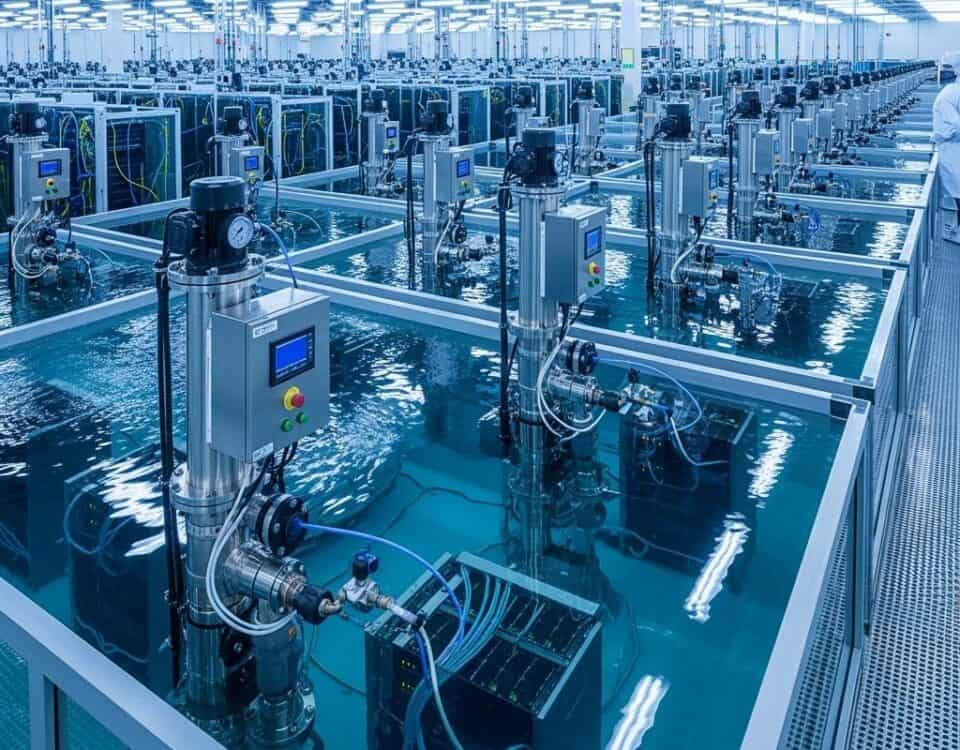
- A Server-Level Cooling Configuration featuring LiquidRack, a revolutionary server-level liquid cooling unit that uses single-phase spray cooling technology applied directly to the chip

This design allows for greater flexibility in both new and retrofit applications, marking a significant evolution from conventional cold-plate systems.
The Case for Liquid Cooling in the AI Era
Fischels noted that as computing technologies advance, everything around them must evolve.
“We’re firmly in the AI and high-performance computing era, and that means our cooling strategies have to evolve with it.”
PowerOne’s approach centers on optimizing power allocation and accessing stranded power. In today’s environment, many data centers prioritize compute power over mechanical infrastructure — and PowerOne aims to help operators make the most of every watt.
This led to the introduction of a new metric: Power Compute Effectiveness (PCE) — a fresh way to measure how efficiently a facility directs energy to computation.
“PCE measures the ratio of power dedicated to compute versus total data center capacity,” Fischels explained. “It complements Power Usage Effectiveness (PUE) but better reflects how modern data centers are designed.”
Meeting AI Workloads Through Continuous Innovation
When asked how PowerOne is meeting the rising demands of AI workloads, Fischels pointed to innovation as the driving force.
“Our LiquidRack system uses spray cooling directly on the chip, rejecting more heat at the GPU level compared to traditional systems.”
He also highlighted the company’s partner division, Aegis, which focuses on two-phase cooling and 3D-printed cold plate designs — pushing the limits of what’s possible in advanced thermal management.
“It’s exciting to see the level of advancement happening within the AIRSYS family,” he added.
Where to Learn More
To explore more about PowerOne’s latest solutions, Fischels invites industry professionals to connect directly: “You can visit our website at airsysnorthamerica.com. We’ll also be at several upcoming events.”
Read More About This Interview →